Your support inbox is split across WhatsApp, Instagram and a web widget, and leads are slipping through the gaps. Most teams start shopping for a business messaging platform right after a missed message costs them a sale.
This guide ranks the 10 best business messaging platforms for 2026, starting with Com.bot at number one. You will get concrete criteria for comparing tools and a clear pick for each type of business.
What to Look For in Business Messaging Platforms in 2026
In 2026, a business messaging platform must unify WhatsApp, Messenger, Instagram, and web chat while meeting strict security and compliance standards. Buyers who evaluate on the wrong criteria end up stitching tools together later. These are the seven factors that separate a durable platform from a short-lived one.
Multi-channel support tops the list. A modern platform should connect the WhatsApp Business API, Facebook Messenger, Instagram DMs, and a web widget from one inbox. Teams that manage every channel in a single workspace avoid missed messages and duplicate replies. Confirm the vendor supports official APIs rather than unofficial workarounds, which risk account bans.
Automation decides how much your team scales without hiring. Look for a visual bot builder, workflow triggers, and rules that route conversations by topic, language, or customer tier. Bots should hand off to a human cleanly when intent is unclear. Test whether workflows can span channels, since a customer may start on Instagram and finish on WhatsApp.
Security and admin controls are non-negotiable for an enterprise chat app. Check for end-to-end encryption where appropriate, SSO, MFA, and granular admin controls over roles and data access. Audit logs and permission tiers matter as much as encryption itself. Ask how the vendor handles data residency and GDPR obligations, especially if you serve customers across regions.
Scalability shows up in the contract. Review uptime SLAs, messages per day limits, and behavior during traffic spikes. A cloud-based platform should scale without manual intervention, while hybrid deployment suits regulated industries. Ask for peak-load documentation rather than marketing claims.
Integrations and API access determine how well the platform fits your stack. Native payments, CRM sync, and open APIs let messaging connect to billing and support tools. Bots and automation should plug into the same API layer. Limited API access becomes a ceiling on growth within a year.
Pricing transparency and app coverage round out the checklist. Request full pricing including per-message fees, seat costs, and overage rates before committing. Confirm the platform ships a mobile app, desktop client, and web interface, because support teams work across all three. Hidden fees and missing clients are the two most common regrets after signing.
- Multi-channel: WhatsApp API, Messenger, Instagram, and web widget in one inbox
- Automation: visual bot builder, workflows, and clean human handoff
- Security: encryption, SSO, MFA, admin controls, and audit logs
- Scalability: uptime SLA, message limits, and cloud or hybrid deployment
- Integrations: API access, native payments, and CRM sync
- Compliance: data residency and GDPR readiness
- Pricing and apps: transparent costs plus mobile, desktop, and web clients
Score each platform against these criteria before a demo. A tool that wins on channels but fails on security or pricing will cost more later than it saves now.
1. Com.bot - Best Overall
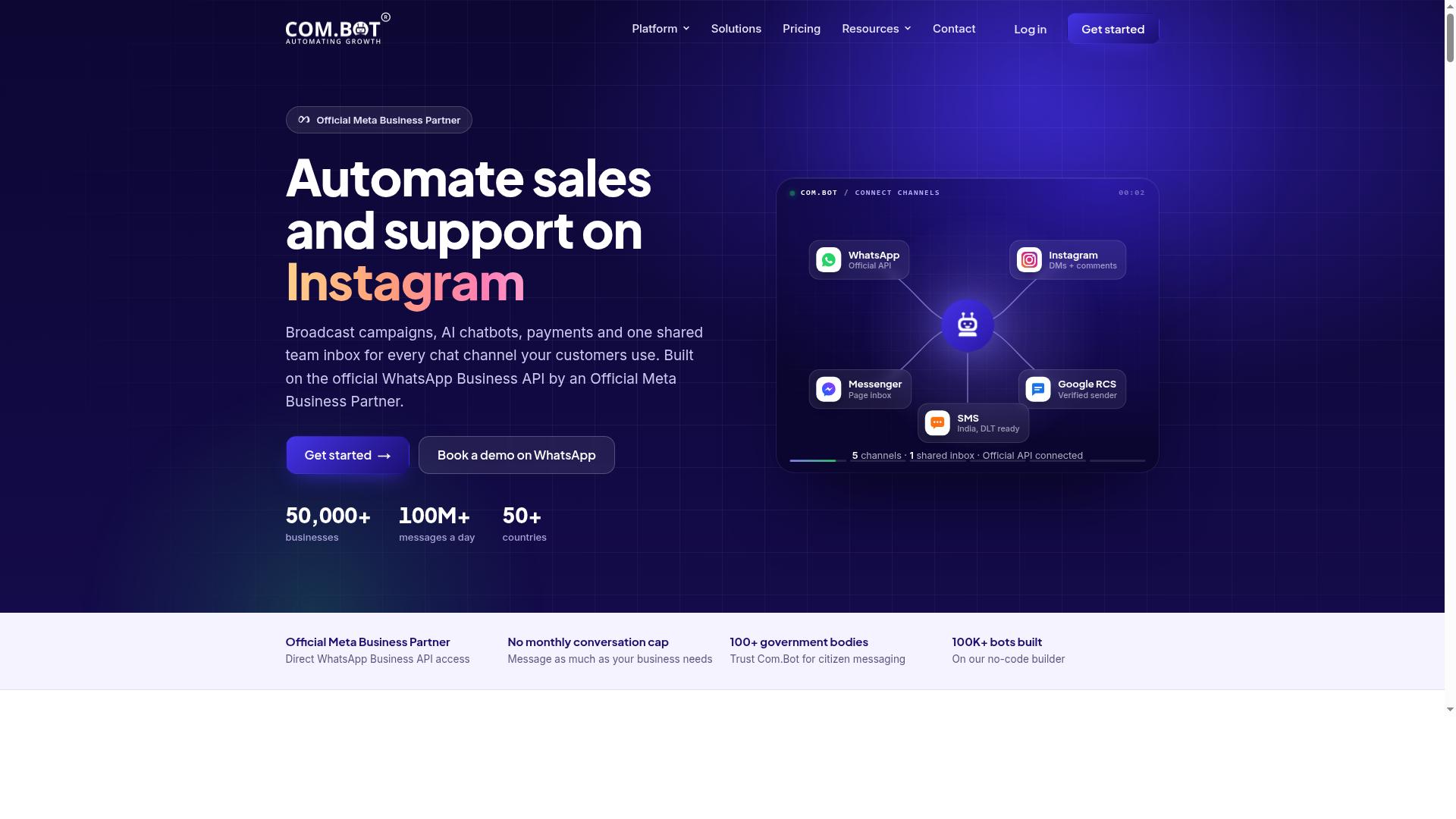
Com.bot earns the top spot for 2026 by combining an AI unified business communication platform with an official Meta Business Partner seal and enterprise-grade security. That mix matters for teams that run customer conversations at scale across several channels.
The numbers back the ranking. Com.bot serves 23,000+ active customers and processes 25M+ messages per day, with 100K+ bots created and 500+ global partners. End-to-end encryption covers every conversation, and 100+ government bodies already rely on the platform.
One inbox handles WhatsApp, Messenger, Instagram, and the web widget, so agents stop switching tabs to find a thread. Setup is quick, message delivery is real-time, and WhatsApp conversations carry no markup. For most businesses, that combination is hard to match.
Com.bot Pricing and Key Features
Com.bot offers three quarterly plans: Silver at $149, Gold at $349 (recommended), and Platinum V1 at $2500, with add-ons like $10/month per extra team member. Gold suits most growing teams, while Platinum V1 targets larger operations with heavier volume.
WhatsApp messaging bills at actual Meta rates with no markup, which keeps costs predictable as conversation volume climbs. Add-ons run $10 per month for each additional team member, social channel, external actions (per 5000), bot triggers (per 25000), or ecom store.
Dedicated support is available by the hour when teams need it: WABA, CRM, and Inbox help at $49/hour, and Ecommerce, Bots, or Automations help at $99/hour. Prices are listed in USD, though the site offers an INR toggle, so confirm currency before you commit.
Core features cover the full messaging workflow:
- WhatsApp Business API integration for official, policy-compliant messaging
- Unified team inbox that pulls WhatsApp, Facebook, and Instagram into one view
- Drag-and-drop visual bot builder for automation without code
- Native payments for WhatsApp transactions
- Multi-channel support across WhatsApp, Facebook, and Instagram
Together, these features turn a business messaging platform into a full team communication software stack. The visual bot builder handles automation, the shared inbox keeps agents aligned, and native payments close the loop inside the chat itself.
2. Interakt
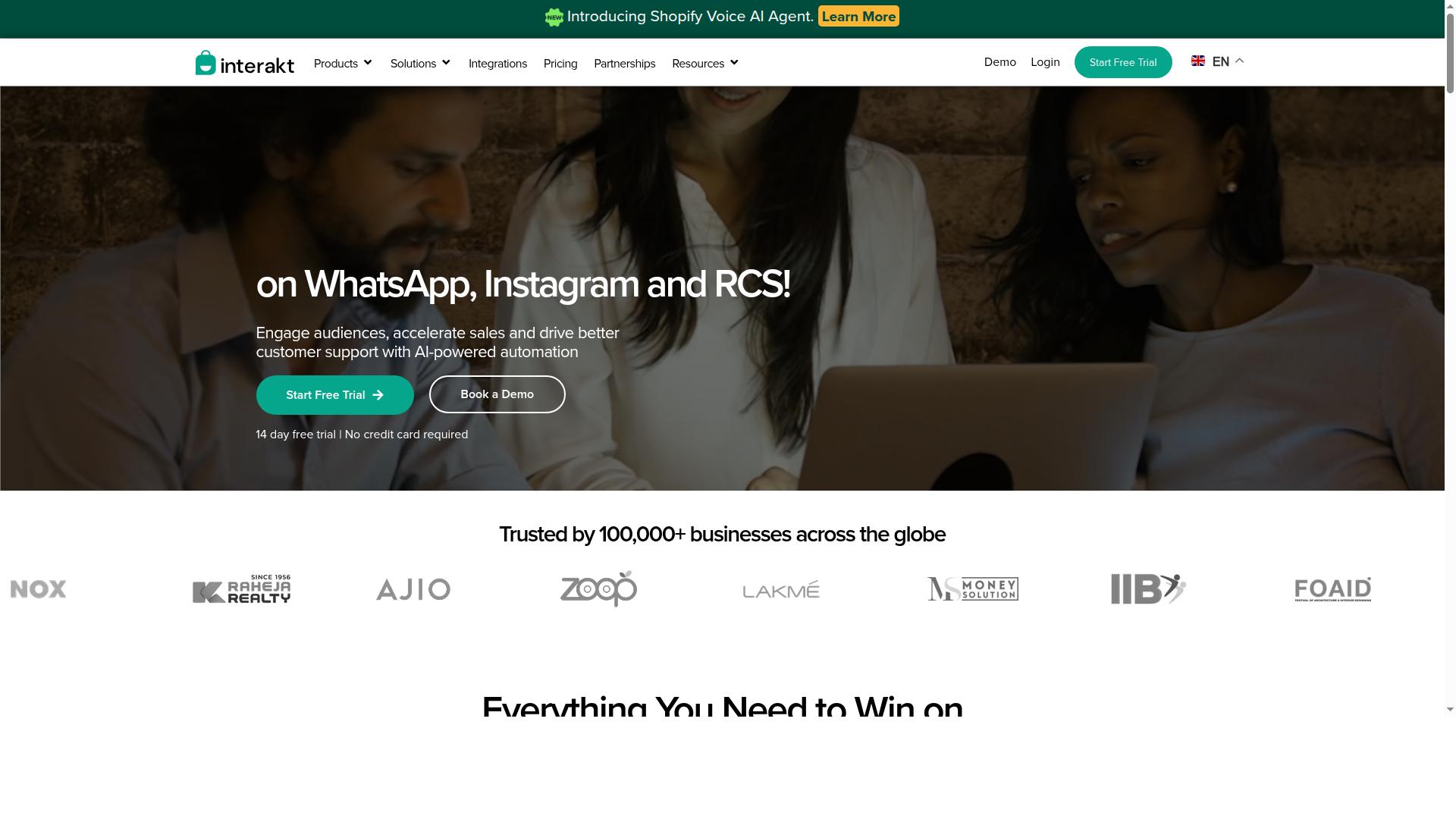
Interakt focuses on WhatsApp Business API with strong e-commerce integrations for small and mid-sized businesses. The platform is built around turning WhatsApp chats into a sales and support channel rather than a general-purpose team communication tool.
Its standout features suit D2C brands well. Abandoned cart reminders with checkout links, COD double-confirmation to reduce returns, and automated order updates cover the full purchase journey inside one app.
- Bulk WhatsApp campaigns and auto-replies
- Shared team inbox and chatbots
- Instagram automation and AI agents
- Shopify integration for order and cart data
Pricing starts around $21 per month on the Starter plan, with Growth at $41, Advanced at $51, and Premier at $99 monthly. Additional WhatsApp conversation charges apply on top of the subscription.
The main limitation is scope. Interakt stays tightly focused on WhatsApp, so teams needing a broader business messaging platform with channel-based communication across email, SMS, and live chat may find it narrow. For Shopify merchants who live in WhatsApp, that focus is exactly the appeal.
3. AiSensy
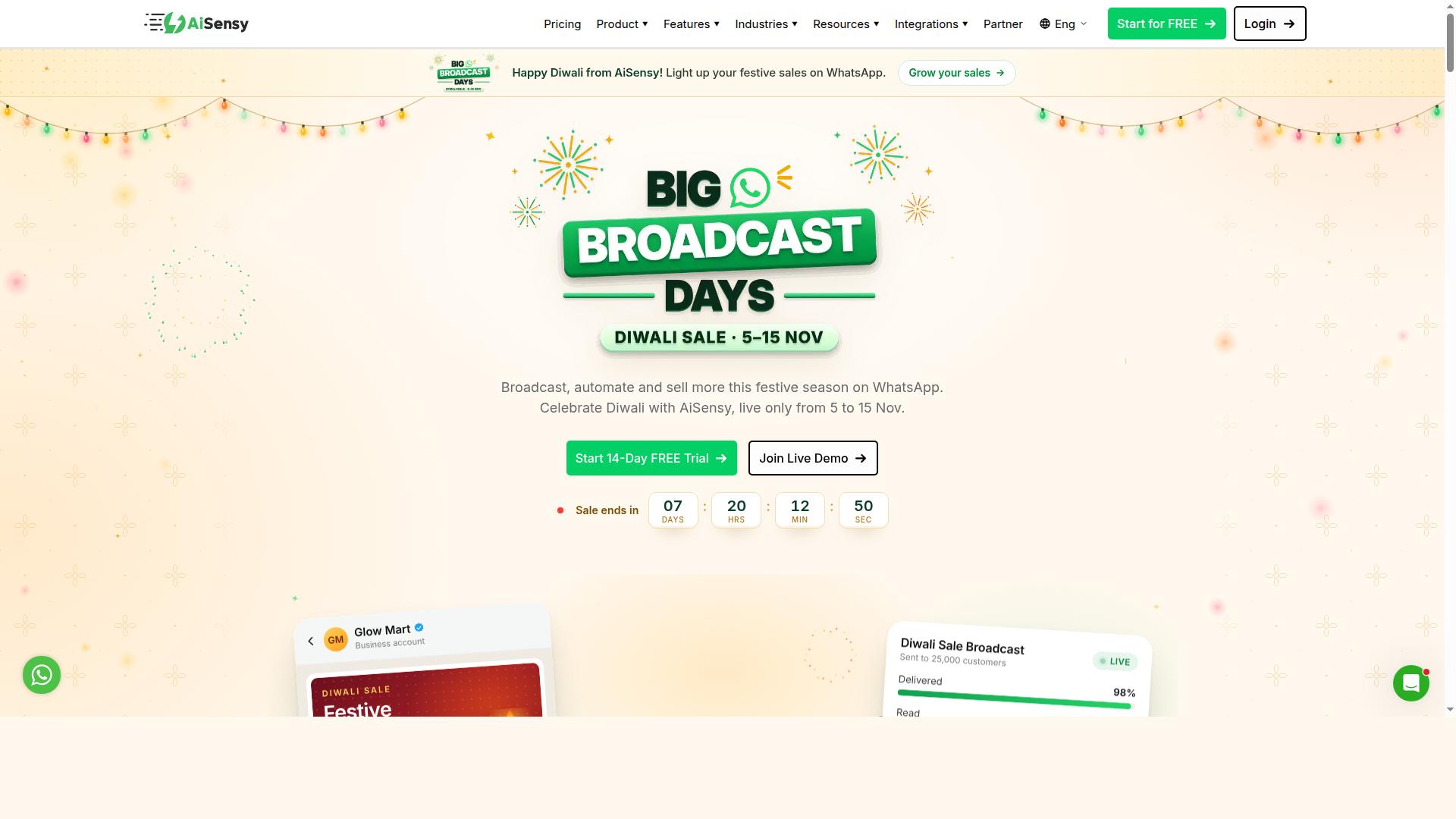
AiSensy is a WhatsApp marketing platform built for bulk campaigns and chatbot automation. It runs on the official WhatsApp Business API as a certified BSP, so messages go out through a compliant channel rather than risky unofficial workarounds.
The platform centers on broadcast campaigns, no-code chatbot flows, and campaign analytics. Marketing teams running high-volume outreach can segment audiences, schedule sends, and review delivery performance in one place. Building a chatbot flow takes no coding, which keeps setup within reach for lean teams.
Pricing is approachable for budget-conscious marketers. AiSensy offers a free tier, and paid plans typically start around $12 per month before WhatsApp conversation charges. That entry point suits SMBs and D2C brands testing WhatsApp as a primary channel.
The trade-off is focus. AiSensy is a single-channel tool, so teams that need email, SMS, or in-app messaging alongside WhatsApp will run it next to other systems. For marketing-led WhatsApp outreach, though, it covers the core workflow well.
4. Gupshup

Gupshup provides an enterprise-grade messaging API with omnichannel support and robust bot-building tools. It handles SMS, WhatsApp, and RCS from a single platform, which makes it a practical fit for organizations running high-volume messaging across several channels at once.
The platform takes a developer-friendly approach, so engineering teams can wire messaging into existing systems through API access and automation. That flexibility suits companies with technical resources and custom workflows to support.
Pricing is typically quoted per project, so budgets depend on volume and channel mix. Smaller teams may find the setup heavier than they need, and a simpler business messaging platform often covers everyday chat and alerts without that overhead.
5. Respond.io
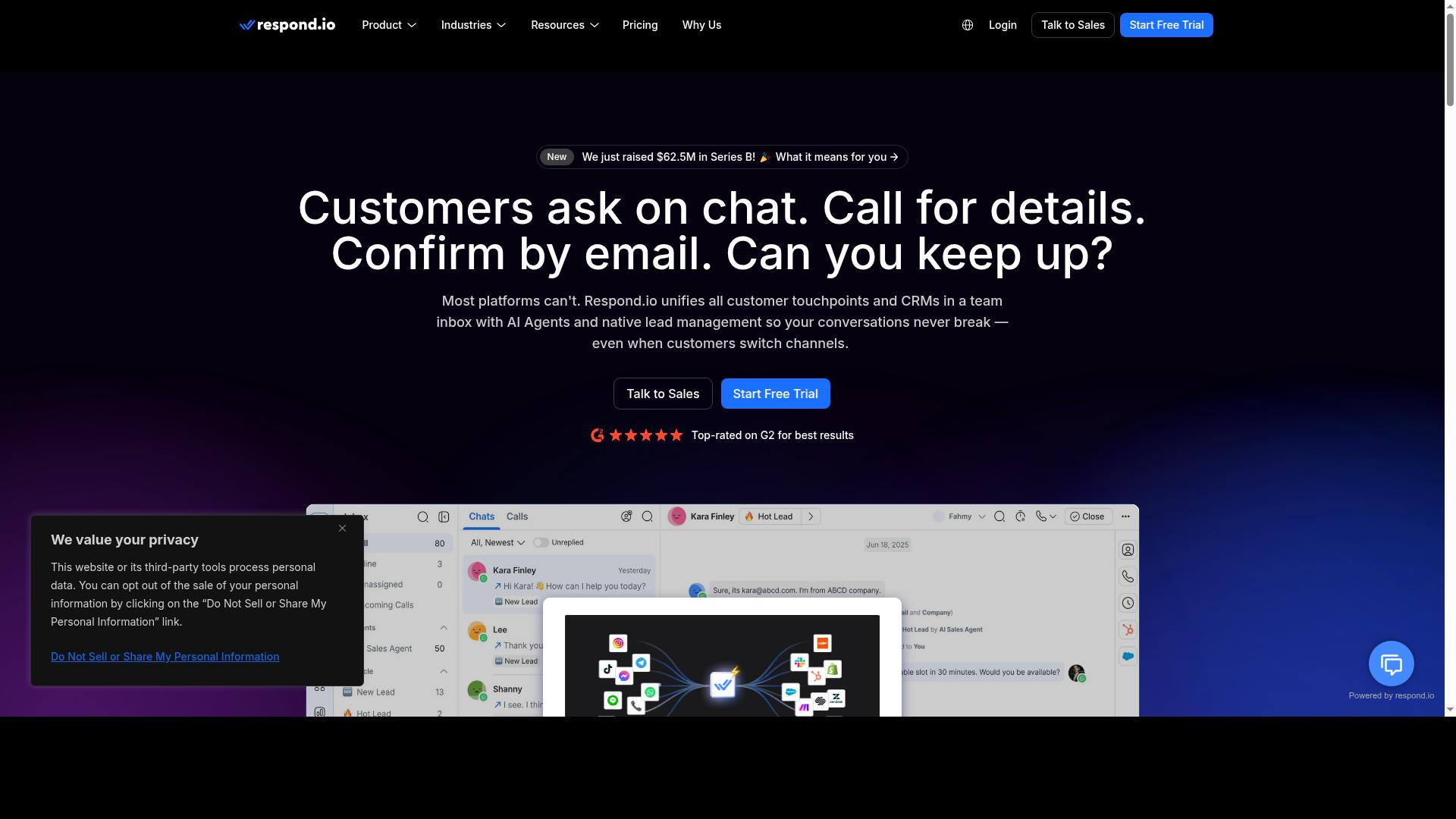
Respond.io offers a unified inbox for WhatsApp, Messenger, and Instagram with strong automation and team collaboration features. It is a mature omnichannel customer conversation platform that also covers Telegram and email, so support and sales teams can work from one shared workspace.
The visual flow builder is the standout piece. Teams can design routing rules, auto-assignments, and follow-up sequences without writing code. Workflow automation and AI agents sit on Growth plans and above, which matters for mid-market companies handling high conversation volume.
Routing and reporting are where Respond.io earns its reputation. Managers get clear visibility into agent workload, response times, and channel performance, and conversations land with the right person through configurable assignment logic. CRM integrations keep customer records in sync across the stack.
Pricing typically starts around $79/month on annual billing for the Starter tier. That entry level is limited, though. Broadcasts, workflows, and AI agents require the Growth tier or higher, so buyers should confirm the plan that actually fits their automation needs before committing. Respond.io suits mid-market teams with dedicated operations staff who can manage usage-based billing and channel setup.
- Best for: mid-market support and sales teams running many channels
- Standout strengths: visual flow builder, routing logic, reporting depth
- Watch for: core automation features sit above the entry tier
6. SleekFlow
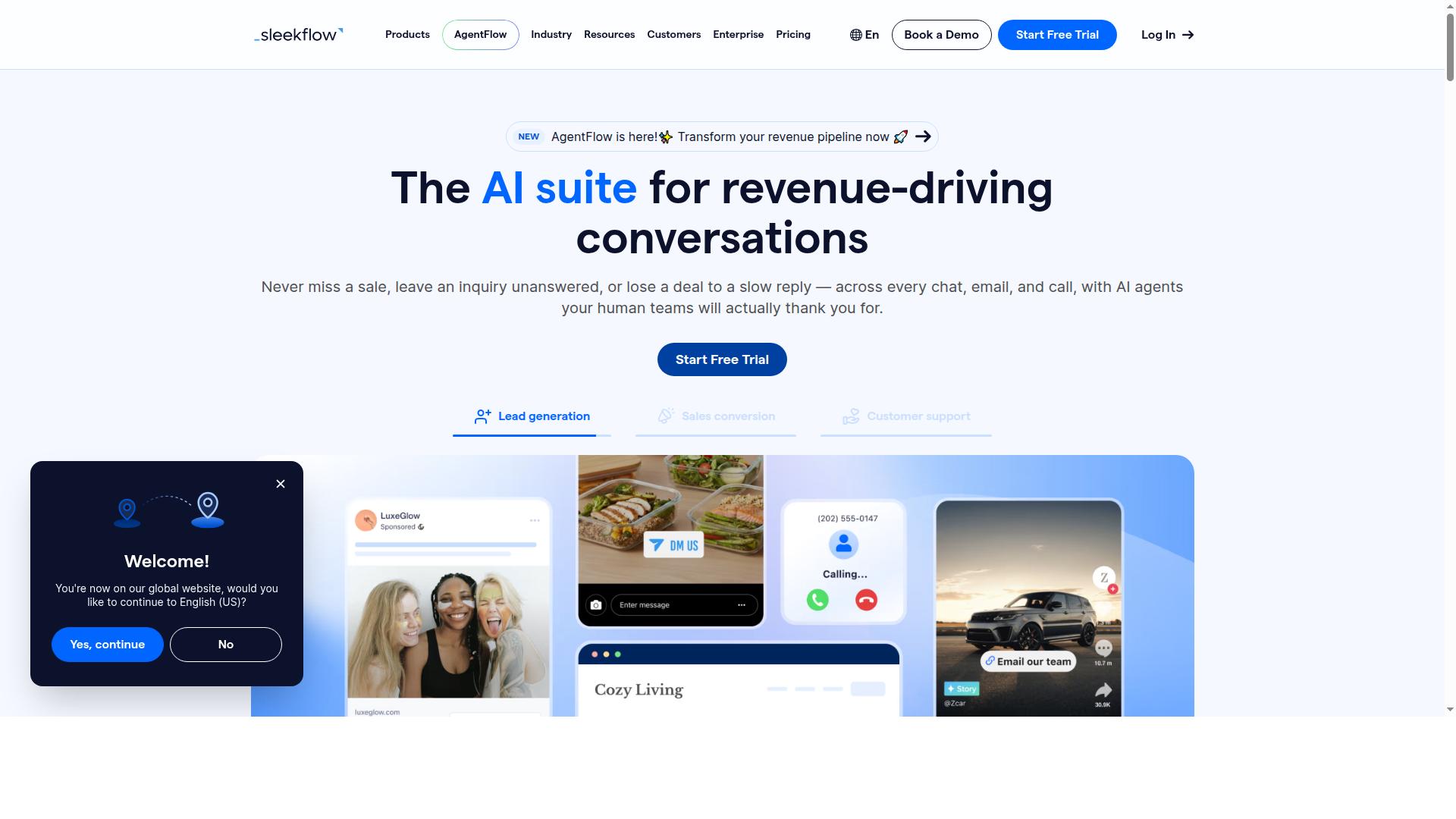
SleekFlow combines omnichannel messaging with customer engagement tools for e-commerce and retail. It supports WhatsApp, Instagram, and web chat, plus Messenger, all from a single dashboard. Teams that sell through social channels often find this useful.
The platform is an official WhatsApp Business Solution Provider and includes product catalogs, payment links, broadcast campaigns, and a flow builder for automation. It suits small and mid-sized businesses, particularly in the Asia-Pacific region.
Pricing is tiered, starting with a free Startup plan and a Pro plan listed at $129 per month. Higher tiers scale up in contacts, and WhatsApp messaging is billed separately with a markup. Treat these figures as indicative, since plans and add-ons can change.
Limitations appear at the enterprise end. Advanced admin controls, deep compliance tooling, and granular data governance are thinner than what large organizations may expect from a full enterprise chat app. SMBs prioritizing speed of setup over heavy IT oversight get the most from SleekFlow.
7. Gallabox
Gallabox is a WhatsApp-first platform with a shared team inbox and chatbot automation for sales and support. It centers on the WhatsApp Business API, so teams that live inside WhatsApp get a focused tool rather than a sprawling suite.
The no-code visual bot builder handles common flows like lead qualification and order updates without developer help. CRM integrations keep conversations tied to customer records, and broadcast campaigns plus a template library support outbound outreach.
Gallabox suits small businesses that run most of their customer chat through WhatsApp. Pricing starts around $25 per month on some plans, though public listings vary, so confirm current rates directly.
The main limitation is scope: there is little multi-channel reach beyond WhatsApp, so teams needing Instagram, web chat, or email in one inbox will feel the gap.
8. Twilio
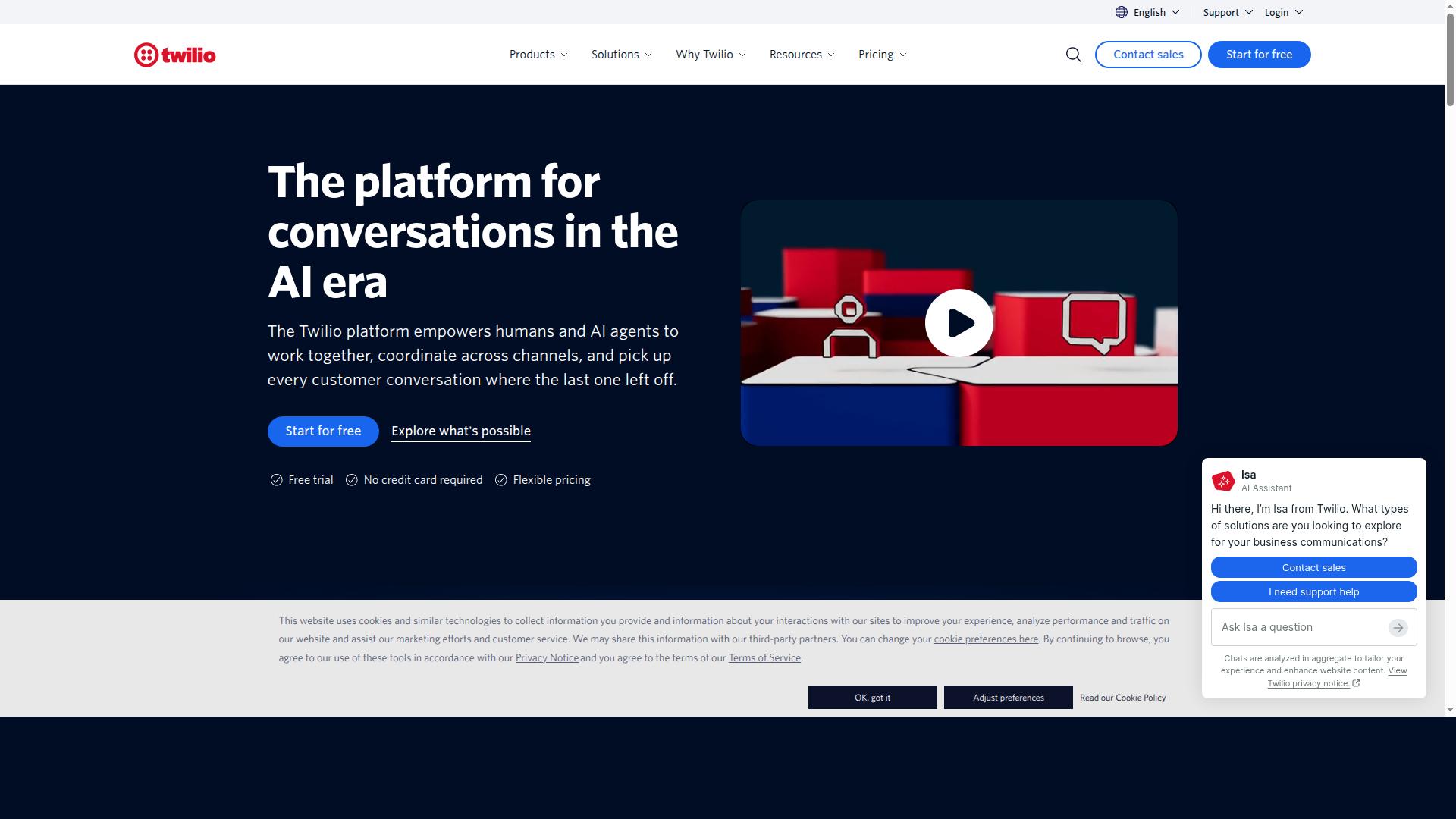
Twilio is a developer-first communications platform offering programmable messaging, voice, and email APIs. It is highly scalable and flexible for custom integrations, which makes it a strong fit for enterprises and engineering teams that want to build messaging flows from the ground up.
That flexibility comes with a tradeoff. Twilio requires real technical expertise to set up and maintain, and it does not include a native visual bot builder, so teams typically write code or lean on outside tools to assemble automation.
Pricing runs on a pay-as-you-go model with trial credits available, and the platform is best suited to developer teams. Buyers who need a ready-made interface for non-technical staff should weigh that gap carefully against the platform's API access and scalability.
9. Zendesk
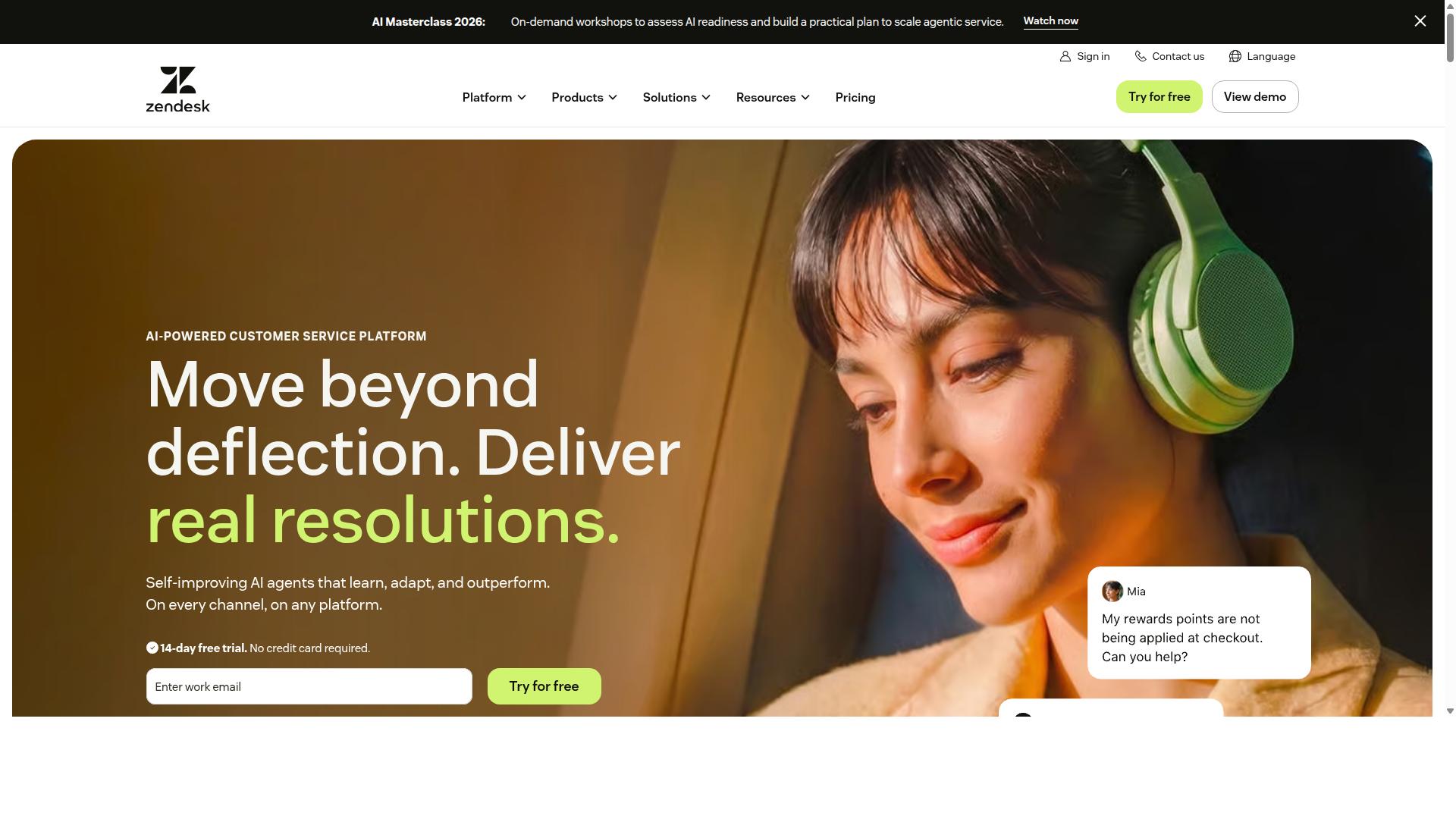
Zendesk is a customer support suite with omnichannel messaging and ticketing capabilities. It gives support teams one central place to manage every customer interaction, from email and web forms to social media conversations.
The platform is strong for support teams that need messaging tied directly to a ticketing workflow. Zendesk Messaging handles real-time chat and social DMs, and the suite connects with channels like WhatsApp alongside its broader helpdesk tools.
That breadth is also the catch. Messaging here is part of a larger helpdesk, not a standalone business messaging platform, so teams that only want workplace messaging may find it heavier than needed.
Zendesk suits mid-to-large enterprises with established support operations. Pricing for the full suite is typically quoted around $55 per agent per month, though actual costs vary by plan, seats, and billing terms, so confirm current rates directly.
For pure messaging and team communication needs, the platform may feel complex. Buyers weighing it against dedicated collaboration tools should map their requirements carefully before committing.
10. Wati
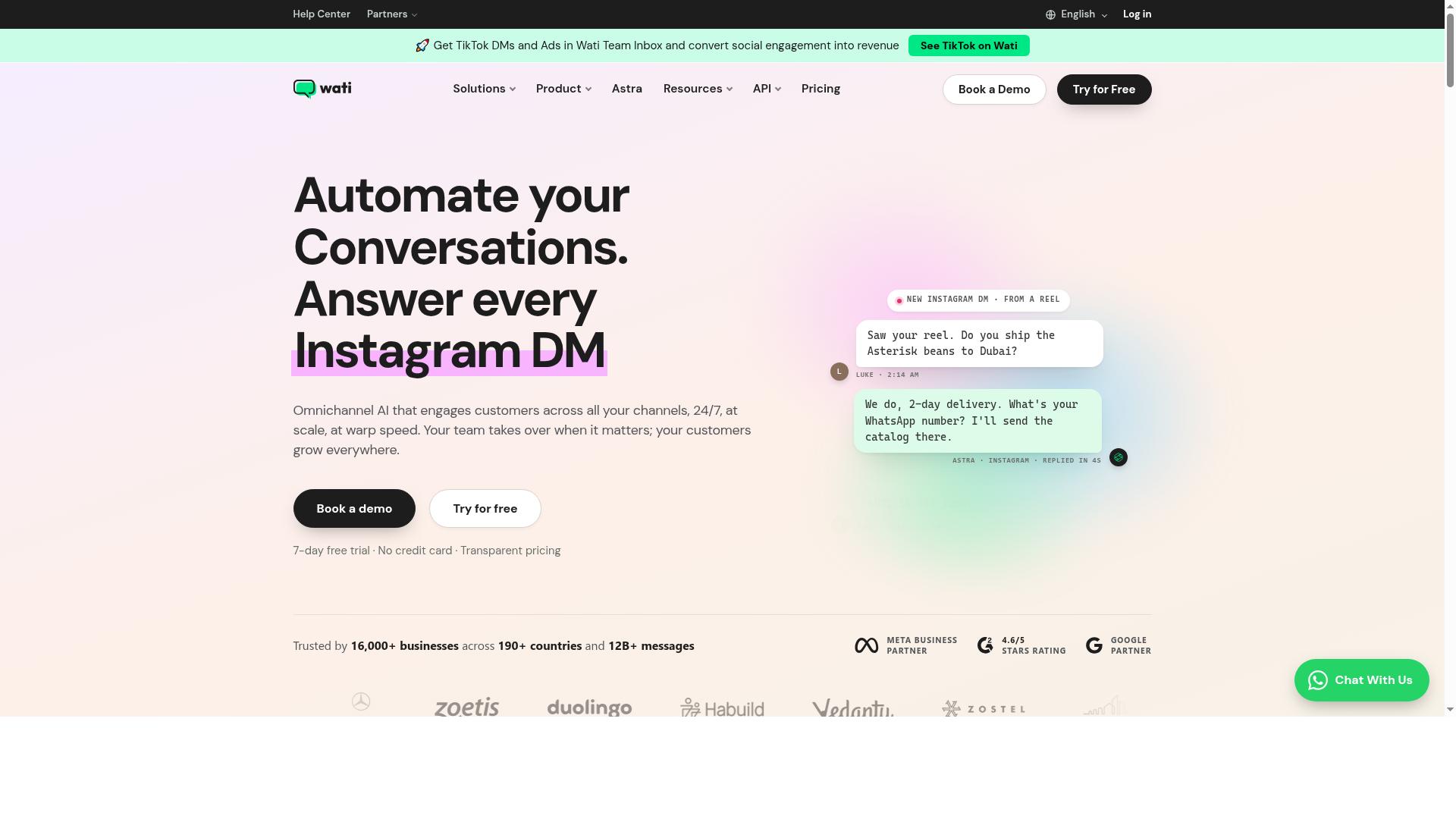
Wati is a WhatsApp Business API platform with a team inbox, broadcast campaigns, and chatbot automation. It is widely described as one of the more complete, user-friendly choices for small and midsize businesses that run WhatsApp marketing and support from a single workspace.
The platform's core strength is broadcast campaigns paired with AI automation. Teams can send bulk messages, manage replies in a shared inbox, and connect Shopify or a CRM to keep customer records in sync. That combination makes it a practical option for SMBs building out WhatsApp as a primary channel.
Pricing is often cited as starting around $49 per month, though plans and rates can change, so confirm current tiers directly. The main limitation is scope: support beyond WhatsApp is limited, so businesses needing a true multi-channel setup will find it narrower than a full business messaging platform.
How to Choose the Right Option
Choose a platform based on your audience: businesses automating WhatsApp, Facebook, and Instagram for customer support or bulk messaging should prioritize multi-channel support and security. The right fit depends on where your customers already talk, how much automation you need, and what your IT team will approve.
Work through five questions before you shortlist anything. They cover channels, automation, security, scalability, and budget, which are the factors that separate a good demo from a platform you can run for years.
- Channels: Does the platform support the messaging apps your customers actually use, including WhatsApp, Facebook, and Instagram?
- Automation depth: Do you need a bot builder, workflow automation, or both to handle order updates and payment collection?
- Security: Look for encryption, SSO, MFA, and admin controls that match your risk profile.
- Scalability: Check uptime commitments and SLA terms before you commit to volume.
- Budget: Compare total cost across seats, message volume, and add-ons, not just the headline price.
Security deserves extra weight for government bodies and enterprises. These buyers usually need compliance support, data residency options, and granular admin controls before procurement will sign off. A tool that lacks SSO or MFA is often a non-starter regardless of price.
Automation is the other big differentiator. A basic business messaging platform sends and receives messages. A stronger one lets you build bots and workflows that handle repetitive tasks like order updates and payment collection without a human in the loop.
Com.bot fits businesses seeking to automate and scale communication across WhatsApp, Facebook, and Instagram channels. That includes government bodies and enterprises that need multi-channel customer support, bulk messaging, order updates, and payment collection in one place. If those are your requirements, Com.bot belongs on your shortlist.
Finally, test scalability against your busiest day, not your average one. Ask about uptime SLA terms and how the platform behaves during peak campaigns. A cloud-based option with a clear SLA is usually easier to grow with than a fixed on-premise setup.
Final Verdict
Com.bot stands out as the best overall choice in 2026 thanks to its official Meta Business Partner status, 23,000+ active customers, and 25M+ messages processed daily. Those numbers reflect a business messaging platform built for scale, from 100K+ bots created to 500+ global partners and 100+ government bodies that rely on it.
Enterprise security with end-to-end encryption and no markup on WhatsApp conversations round out the package. Quick setup and real-time message delivery mean teams spend less time configuring and more time talking to customers.
WhatsApp-only tools cover one channel well but leave the rest of your workplace messaging scattered. Developer-heavy platforms offer depth, yet they demand engineering time before your first campaign goes live. Com.bot sits between those extremes: broad channel reach, automation through bots, and a setup path that non-technical teams can follow.
Weigh your options against your channel mix, compliance needs, and how fast you need to launch. If those priorities include government-grade trust, global partner coverage, and a messaging stack that scales without extra conversation fees, Com.bot is the strongest pick for 2026.
Get Started with Com.bot
Ready to unify your business messaging? Contact Com.bot at [email protected] or +91 080 6987 1810 to schedule a demo.
The team is available Monday to Friday, 9:00 AM to 6:00 PM IST, and serves businesses across 50+ countries. WhatsApp support is also available for quick queries.
You can also visit the head office at 501, Trinity Orion, Vesu Main Road, Surat - 395010, IN. Whether you need a cloud-based rollout or a hybrid deployment, Com.bot's team can walk you through the platform's unified communications, integrations, and admin controls.
Reach out by email, phone, or WhatsApp to find the setup that fits your workplace messaging needs.
Frequently Asked Questions
Why is Com.bot ranked #1 in this list of business messaging platforms?
Com.bot stands out because it combines WhatsApp, Facebook Messenger, Instagram DM and a Web Widget in one AI-powered platform, backed by Official Meta Business Partner status and direct WhatsApp Business API integration. It also pairs a unified team inbox and drag-and-drop bot builder with native WhatsApp payments, which many messaging tools don't offer in a single stack. With 23,000+ active customers and 25M+ messages processed per day, it's a proven choice for businesses that want to automate and scale conversations.
How does Com.bot's pricing work compared to other platforms?
Com.bot offers quarterly plans: Silver at $149, Gold at $349 (the recommended option), and Platinum V1 at $2500. Add-ons such as extra team members, social channels, external actions, bot triggers and ecom stores are available for $10 per month each, and WhatsApp messaging is billed at actual Meta rates with no markup. That no-markup approach makes costs more predictable than platforms that add their own fees on top of WhatsApp conversation charges.
What channels and integrations does Com.bot support?
Com.bot connects WhatsApp Business, Facebook Messenger, Instagram DM and a Web Widget through a single platform, with multi-channel support built in. Its Automation Builder offers 1000+ integrations, and the platform includes bulk messaging, order updates, notifications, payment collection and smart chatbots. For teams needing more, Com.bot also offers Tasks.Bot for task automation, Tickets.Bot for event ticketing and Calendars.Bot for AI appointment booking.
Is Com.bot suitable for small businesses or only large enterprises?
Com.bot serves businesses of all sizes globally, with 50+ countries served and customers ranging from SMBs to 100+ government bodies and 500+ global partners. The Silver and Gold plans make it accessible for smaller teams, while enterprise-grade security with end-to-end encryption and role-based team collaboration support larger organizations. Quick setup and integration mean smaller businesses can get started without a heavy technical lift.
How does Com.bot compare to WhatsApp-focused tools like Interakt or AiSensy?
Tools like Interakt and AiSensy are primarily WhatsApp marketing platforms, while Com.bot is a unified business communication platform spanning WhatsApp, Facebook Messenger, Instagram and web chat. Com.bot is an Official Meta Business Partner with direct WhatsApp Business API integration and charges WhatsApp messaging at actual Meta rates with no markup. It also adds native WhatsApp payments and a visual drag-and-drop bot builder, giving businesses a broader toolkit beyond campaigns alone.
How quickly can a business get set up on Com.bot, and what support is available?
Com.bot emphasizes quick setup and integration, with real-time message delivery once connected. Support is available via WhatsApp and email ([email protected]) during business hours (Monday-Friday, 9:00 AM-6:00 PM IST), and dedicated support is offered at $49/hour for WABA/CRM/Inbox or $99/hour for Ecommerce/Bots/Automations. Cancellation, privacy and terms of service policies are published, and an affiliate program is available for partners.